If you’d asked me at the beginning of my career, when the provision starts, I’d have said the date the consolidated trial balance arrives.
That date is already the problem.
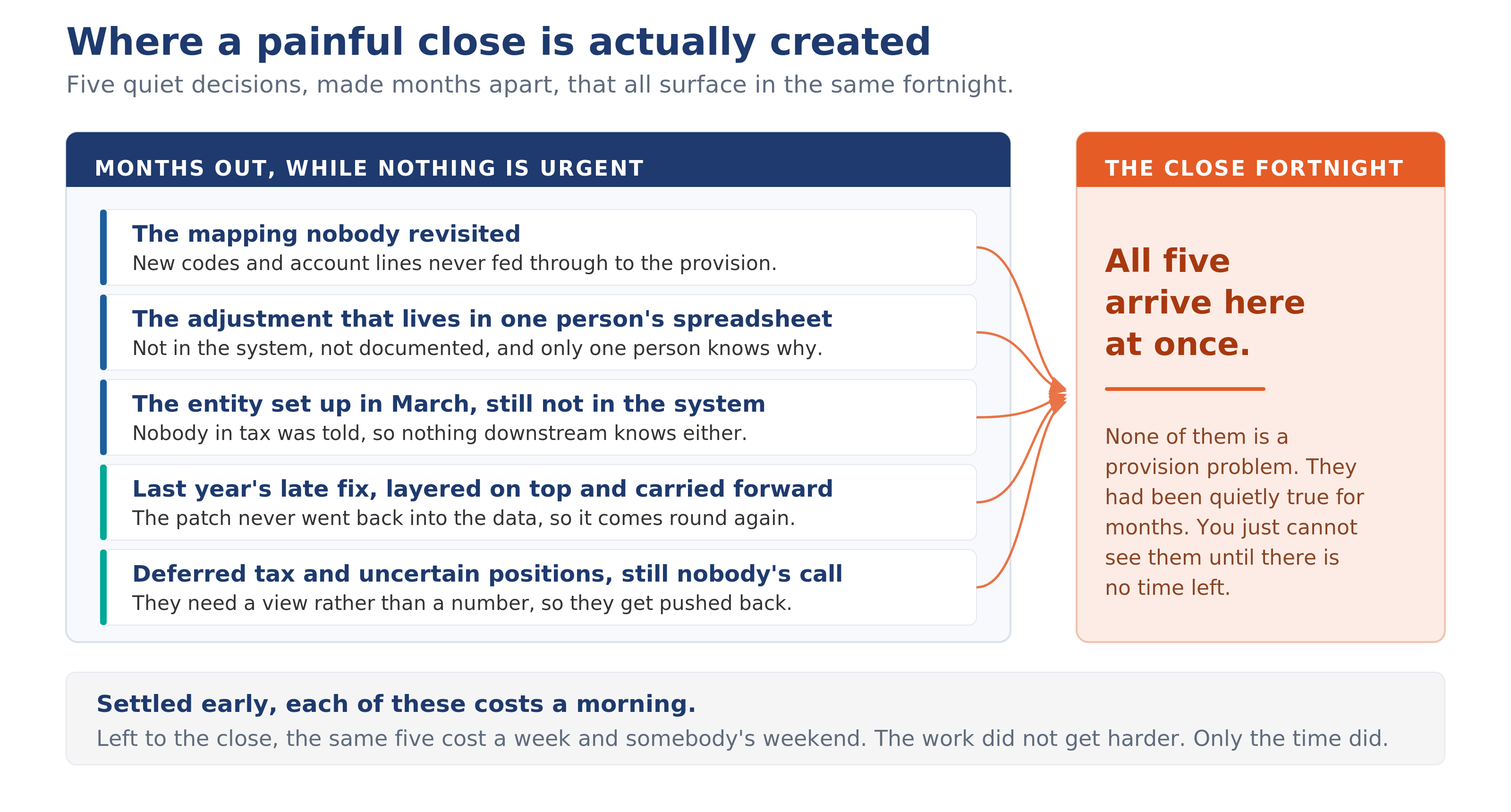
By the time the numbers land, every decision that will make the close painful has already been made. The mapping nobody revisited. The adjustment that lives in one person’s spreadsheet. The entity set up in March that still isn’t in the system. None of those are provision problems. They had been quietly true for months. You cannot see them until you are in the thick of year end.
I ran a tax function before I moved to implementing the systems, so I have been on both sides. The teams with a calm close are not the ones with the best software or the biggest budget. They are the ones who settled a short list of things ahead of time.
So the question is not whether you are ready for the provision. It is what you would have to have finished three months prior to make the close boring.
And if you’re a December year end, you’re four months out, which is exactly the window.
1. Agree the opening position
Reconcile brought-forward deferred tax, losses and credits against last year’s close, and get them agreed. Everything this year sits on top of that, so a shaky opening balance undermines the whole close.
The trap is last year’s late fixes. If a number was corrected at the end by layering an adjustment on top, put the correction back into the underlying data now rather than carrying the patch another twelve months. And tell whoever enters the local data that it has changed, or you will spend the busy period explaining a difference nobody introduced this year.
Return-to-provision true-ups belong here too: calculated, justified and entered before the year end.
2. Test the mapping before you need it
Confirm and test the mapping from the chart of accounts into the provision rather than improvising on the day. Find the new entities, the changed entity codes and the new account lines, and update the workbooks and the system to match.
3. Confirm rates, currencies and law changes
Current rates by jurisdiction. Enacted or substantively enacted future rates for the deferred tax. Closing and average exchange rates if you report across currencies. Any change in tax law or accounting standards that touches the period.
None of it is difficult. It is slow, and it does not compress.
4. Make the judgement calls early
They get pushed to the end precisely because they need a view rather than a number.
Deferred tax assets. Look at the loss-making entities now, decide what you will recognise, and revisit it against how the group is actually trading.
Uncertain tax positions. Where an enquiry has made a position genuinely uncertain, decide whether a provision is required under your accounting standard, quantify it including interest and penalties, and get it to the local users or into the group adjustments. Enquiries move on, so prior-year positions need revisiting too.
Make both calls early, then tell the team. Otherwise everybody guesses separately.
5. Name an owner and agree the timetable
One person accountable. A timetable finance and every contributor has actually signed up to, not one that was circulated. If you rely on other people for data, the request should be with them well before the close, with a deadline they have accepted.
Decide who reviews what, and when, in advance.
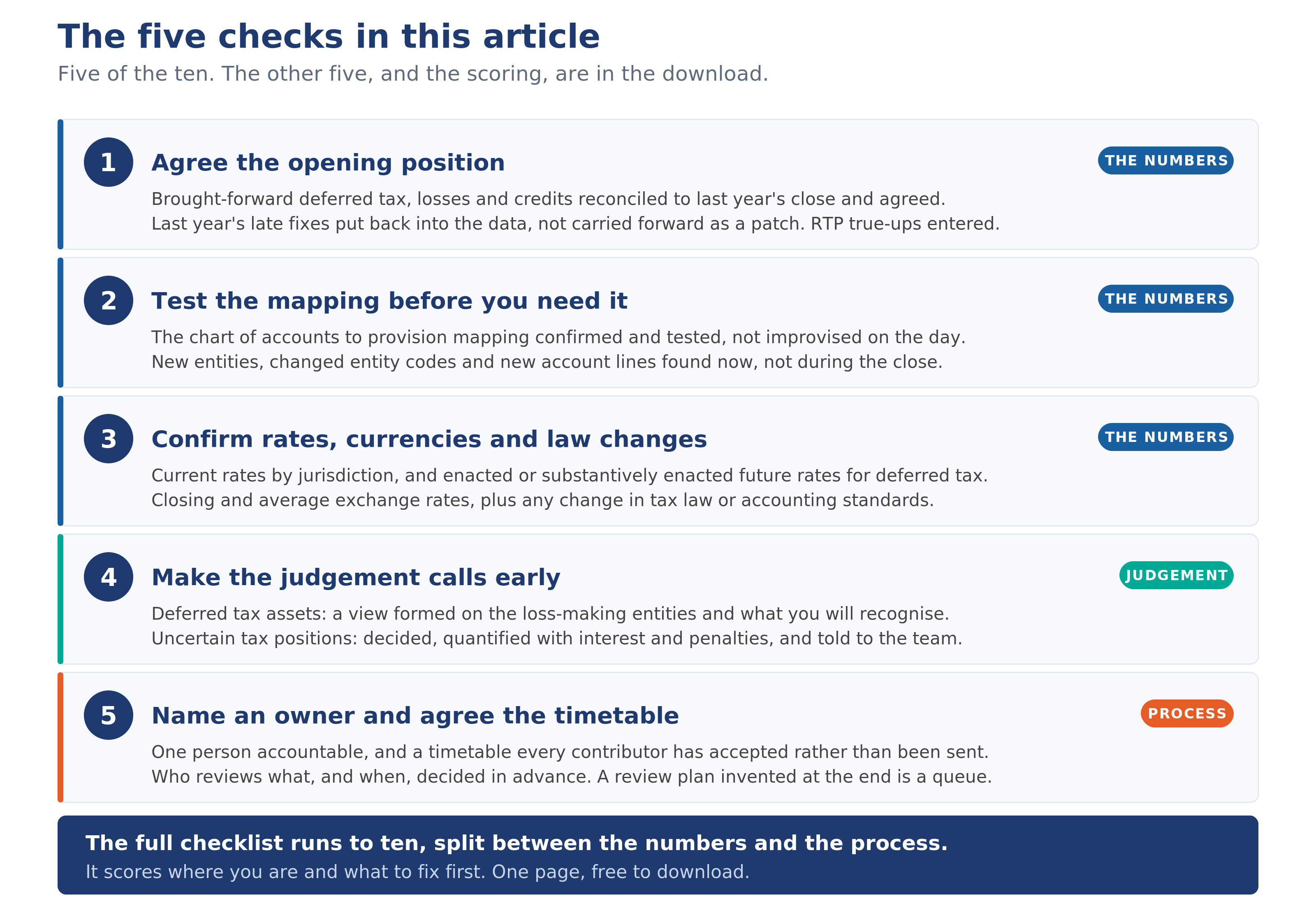
Figure 2. The five checks above, and where each of them sits.
What this is really for
The provision is an estimate. The most useful thing a Head of Tax can do in the close is keep the team out of the detail and on what is material, because the adjustment that gets missed is almost always missed while everybody is buried in something that does not move the number.
All of the above buys back the time to do that.
The full checklist is ten checks, split between the numbers and the process, with a way of scoring where you are and what to fix first. One page, and free.
If two or more of the ten are still open and you have a few months before the close, half an hour with us will save your team weeks at year end. If you are already in it, catch us afterwards, while it is still fresh.